Hello Habitat Brisbane Group Leaders,
Welcome to the December 2025 edition of Habitat Brisbane Updates, your monthly e-news updates from Brisbane City Council's Habitat Brisbane team.
Group Leaders - please forward this email to the volunteers in your group.
If you received this via your Bushcare Group Leader, you can also subscribe below and we’ll send future editions to you directly! Its free and you can unsubscribe at any time.
“Rest is not idleness, and to lie sometimes on the grass under trees on a summer’s day, listening to the murmur of the water, or watching the clouds float across the sky, is by no means a waste of time.” ― John Lubbock
Bushcare can feel like a never-ending job, but its important to sometimes step back, sit down and just enjoy being in nature. And summer’s hot and humid weather is a great excuse to relax and take a break from the hard work of managing weeds and planting. So we hope you enjoy some downtime over the Christmas and New Year period, and we look forward to working with you to restore Brisbane’s bushlands, wetlands and waterways in 2026.
The Habitat Brisbane team recently farewelled Al Ponting, who many of you will know from his work as a HB Support Officer across the city. Unfortunately Al was injured in a workplace incident some years ago, and despite his best efforts, he has been unable to return fully to the job he loved. Al has been a much loved part of Habitat Brisbane, by staff and volunteers alike, and we wish him all the best as he moves on to new adventures outside of the program.
We always welcome contributions to the newsletter, so if there’s something your bushcare group would like to share with the wider network, simply email us at habitat.brisbane@brisbane.qld.gov.au
Happy reading! 😊
In this edition
Humans of Habitat Brisbane - Lesley Miller
BCC Christmas/New Year shutdown period
WHS - Make it to Christmas
Bushcare Basics -
Bushcare for Every Body - Low-Mobility Volunteering Options
Workshop wrap-up: iNaturalist
Upcoming events in 2026!
CPR and First Aid training
iNaturalist update
Weed of the month - Brillantaisia Brillantaisia lamium
Humans of Habitat Brisbane
Lesley Miller - Carmichael Park Bushcare Group
If you’ve visited Carmichael Park over the past 20 years, there’s a good chance you’ve walked through an area shaped, quite literally, by the hands, passion, and perseverance of long-time Habitat Brisbane volunteer and Group Leader Lesley Miller.
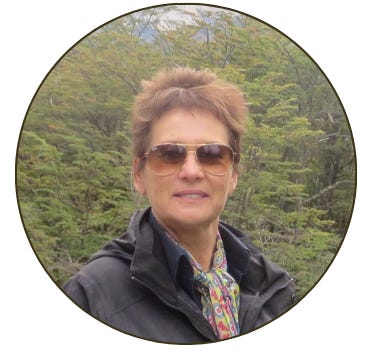
Lesley began volunteering sometime between 2005 and 2010, “pre-2010ish,” she laughs, admitting that the exact year has blurred. What she does remember clearly is that from day one, she stepped straight into the Group Leader role. Initially, she approached Bulimba Creek Catchment Coordinating Committee (B4C) hoping to join an existing group. Instead, she was encouraged to start her own at Carmichael Park. Although hesitant about the administrative workload, she took the plunge and almost 20 years later, she hasn’t looked back.
With a background as a garden designer (mostly overseas), Lesley arrived with a strong knowledge of plants and botanical terminology. As she settled into retirement and into her home beside Carmichael Park in Tingalpa, she saw the local bushland crying out for attention. “The parkland was a treeless desert and the bush area beyond a jungle of weeds” she recalls. But she also saw potential. Bushcare offered the perfect blend of physical work, environmental restoration, and the opportunity to transfer her plant skills to Australian natives while tackling the weeds that threatened them.
What keeps Lesley coming back after all these years? “We’ve achieved a great deal,” she says simply. When she first arrived, Lesley explains, “the area was weed-ridden, uncared for, and largely neglected”. Progress has been slow but steady and deeply satisfying. She also knows that if the “group were to stop, the bushland would quickly revert to its former state”.
This Habitat Brisbane group today is small but mighty, “we are now only two old and three younger volunteers”. Still, Lesley would love to welcome more helping hands to ensure the site continues to thrive.
Propagation has become another successful part of the Carmichael Park approach. One of Lesley’s volunteers has an impressive knack for growing plants from site-collected seed, even some of the trickier species. Currently, trays of young Brisbane Lily’s and a hard-to-propagate native grass are thriving and just about ready to go into the ground. These home-grown plants help strengthen the genetic integrity of the site and ensure new plantings are perfectly suited to local conditions.
Lesley recently moved into a retirement village after caring for a partner with dementia, who has since passed away. Throughout the many challenges life has brought, bushcare has been her most consistent activity. She’s also keen to keep learning and exploring. In November, she took part in the iNaturalist workshop and is looking forward to broadening her horizons and her Citizen Science and volunteering skills further. Caring for nature runs in the family as well, Lesley’s sister volunteers with the Corbie Street Bushcare Group in Ashgrove.
One standout bushcare moment still makes Lesley smile. After receiving a large load of mulch, the group spent a Sunday spreading it across a newly planted area of melaleucas. The very next day, the site was hit with a massive 50 cm downpour that flooded everything. “If we had planted the wrong species, they would never have survived,” she says. But the melaleucas held strong and thrive, a testament to thoughtful restoration and local knowledge paying off.

Thank you, Lesley, for your years of leadership, resilience, and unwavering commitment to Carmichael Park. Your work has transformed a neglected patch of bushland into a thriving habitat for wildlife and a beautiful green space for the local community.
If you have a story you would like to share, please contact Habitat.Brisbane@brisbane.qld.gov.au
BCC Christmas/New Year Shutdown Period
Habitat Brisbane, along with most other Council activities, will close down from Wednesday 24th December 2025 to Tuesday 6th January 2026.
Many of the HB team will also be taking some extra time off to spend with friends and family over the Christmas period.
For any Habitat Brisbane related emergencies during the closedown period please call the BCC 24hr Contact Centre on 3403 8888.
For non-emergencies you can email habitat.brisbane@brisbane.qld.gov.au and we will respond when we’re back in the office early January.
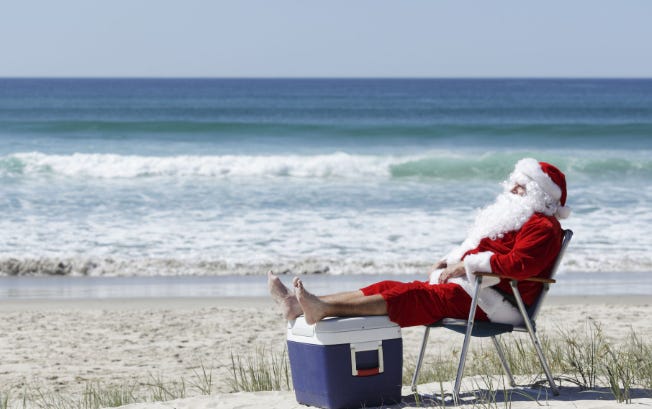
Workplace Health & Safety (WHS) - Make it to Christmas
This is a friendly reminder on the importance of keeping the focus on safety while bushcaring as we lead up to Christmas.
As we approach the Christmas season, we can be faced with numerous distractions and changes in our personal and volunteering environments. A lot of industries experience an increased number of serious to catastrophic incidents over this time of year and this WHS update is a timely reminder of the importance for making sure we are not rushing, taking shortcuts and have adequate controls in place.
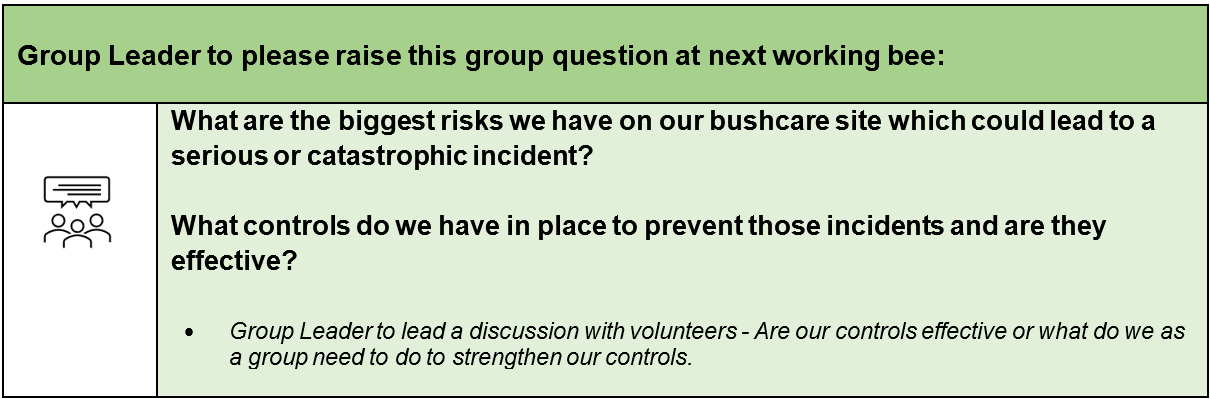
Take Home Message – As we move through the next couple of weeks, please ensure you are not rushing or taking shortcuts and are looking out for your fellow volunteers, so everybody makes it home for Christmas.
Regional Ecosystems – the right plant species in the right place
Last month we introduced the concept of Regional Ecosystems (REs) and why they’re important in bushcare. You may recall any given Regional Ecosystem has three components - the bioregion it occurs in, its geology, soil and landform and the vegetation. This month we’ll look a little closer at the only component of Regional Ecosystems that we as bushcarers can readily influence, which is the vegetation on a site.
Generally the overall objective of bushland restoration is to try and return the vegetation on the site to a state close to “pre-clearing” i.e. the vegetation type and assemblage of species that existed on the site prior to it being cleared or altered following European colonisation.
In rare cases there may have been very little disturbance to the original vegetation on the site over the last few centuries, and restoration may only require managing a few weed species. However in urban areas like Brisbane, most patches of native vegetation have been subject to complete or partial clearing for agriculture or development at some stage. The associated changes in land-use, introduction of non-native plants and animals, changes to natural water systems etc all contribute to forming the vegetation communities that now occur. The level of past disturbance will determine the best approach to restoration e.g. natural regeneration, planting or a mixture of both.
Along with mapping the locations of the various Regional Ecosystems across the state, the Queensland Herbarium have developed lists of the native plant species that occur in each individual RE. This was done by surveying intact examples of the various REs. These species lists also include the relative densities of individual species i.e. approximately how many of a particular species would be found naturally in a given area.
The SEQ Bioregion (represented by the number 12 in the first part of the RE code) stretches from around Rockhampton south to the Qld border. And while some REs will occur right across that range, and have the same broad species structure, some of the less dominant species in the Regional Ecosystem will change dependent on where it’s located. Council has worked with the Queensland Herbarium to develop species list for Regional Ecosystems that reflect the correct vegetation assemblage for Brisbane.
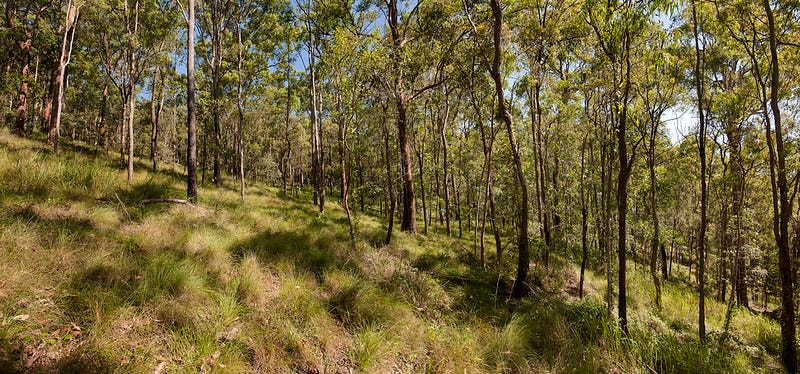
It’s not a case of ‘plant one of each’ species, but using plants from the RE species list in the appropriate areas of your site will help ensure they are suited to the underlying geology and will provide the best chance of survival. And while its unlikely we can ever create an exact replica of the original ecosystem, we can certainly get things heading in the right direction!
Bushcare for Every Body
Bushcare volunteering certainly keeps us active! Weeding and planting involve plenty of bending and squatting, great for keeping our bodies moving as we age. After all, if you don’t use it, you lose it!
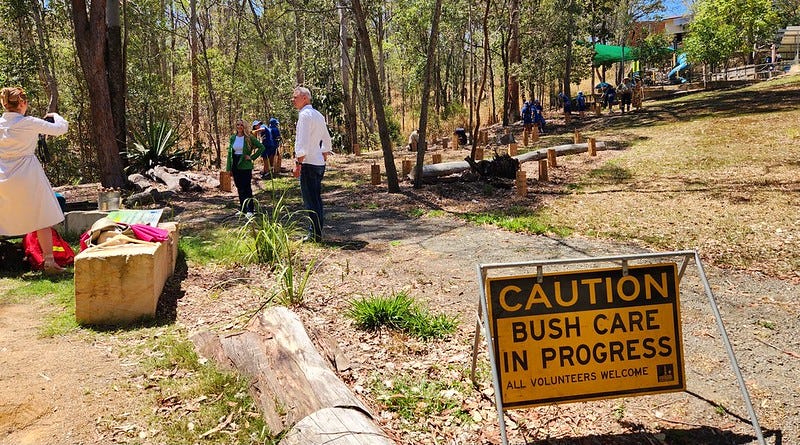
But there are also plenty of low-mobility ways to get involved with Habitat Brisbane.
If you have an idea for how you’d like to contribute to your local bushcare group, or if you’d like to try one of the options listed below, please have a chat with your Group Leader.
Writing, Photography or Citizen Science:
iNaturalist - Sitting at a known vantage point and recording species seen or heard by the group at every working bee.
Photographer - Take groups happy snaps, before and after photo, species flowering etc (Mobile phone quality is absolutely fine!)
Write good news stories - Share the great things your group achieves in your local community, and submit to be include in this monthly e-newsletter to habitat.brisbane@brisbane.qld.gov.au
Hospitality & Volunteer Support:
Welcoming Committee - Greet newcomers, explain what the group does, and help them feel comfortable.
Morning Tea Coordinator - Set up chairs, coordinate snacks, manage supplies.
WHS - Sit in a central spot, keep an eye out for hazards, complete HB Risk Assessment, check in on volunteers, ensure everyone stays hydrated.
Administration & Coordination
Assisting the Group Leader:
by completing the Working Bee Record Form entering planting numbers, weed species lists, volunteer hours, or other reporting requirements, at every working bee.
coordinating working bee reminders, email group members, keep track of special events.
managing sign-in sheets, helping new volunteers register, checking emergency contact details.
Helping Our Community Connect with Bushcare
You may have noticed the Habitat Brisbane signs installed at bushcare sites across the city. These signs help let the community know local volunteers are dedicating their time and energy to protecting and restoring these precious natural areas. They also provide an easy way for potential new volunteers to learn how they can get involved.
Please remember to give your sign a quick wipe-down when needed so it stays clean and welcoming for visitors.
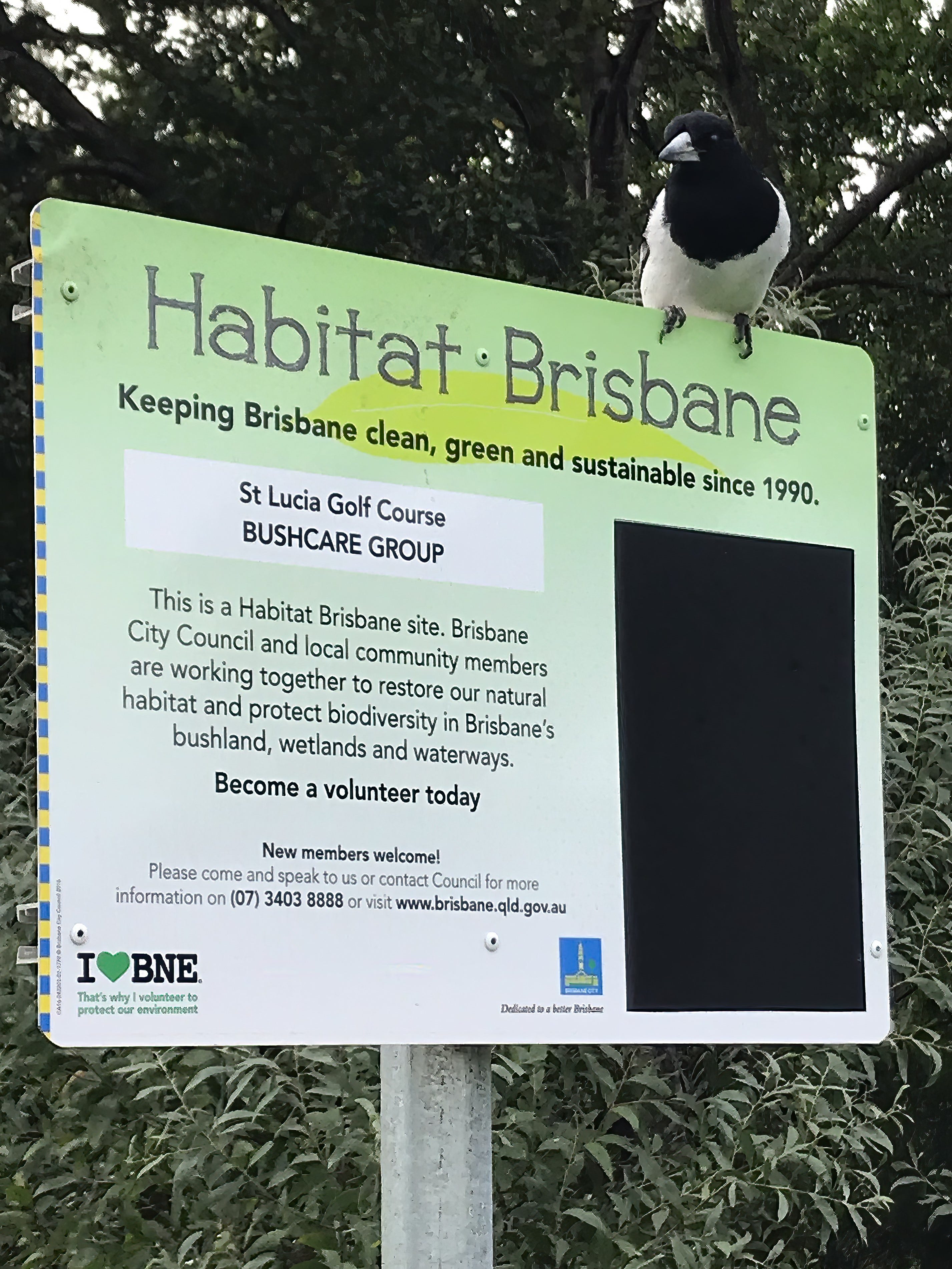
If your group would like help updating or activating your sign, feel free to contact us at habitat.brisbane@brisbane.qld.gov.au
We can offer:
Chalk pens for adding or updating information to the blackboard section
White board sticker to replace the blackboard section, for easier cleaning
Custom decals created by BCC sign shop - for example, if your group has a regular working-bee schedule (e.g. 2nd Sunday of the month, 9–11am)
Find us on Facebook sticker to advertise your group’s social media presence
Workshop wrap-up - iNaturalist
A small number of Habitat Brisbane volunteers jumped in on last-minute vacancies to the recent, ‘How to use iNaturalist. Brisbane Land for Wildlife Workshop’.

Thanks to facilitator and Ecologist Michael Tervo who shared comments with the participants, ‘It was wonderful to spend the morning exploring nature, learning together, and getting more confident recording observations.
As promised, here is a collection of useful resources to support you as you continue using iNaturalist and start building your own biodiversity records at home, or wherever you explore.’
iNaturalist Learning Resources
Detailed Handbook for iNaturalist
https://www.ala.org.au/publications/a-guide-to-inaturalist/
Quick Getting Started Tutorials
https://help.inaturalist.org/en/support/solutions/folders/151000552105
Video Tutorials
https://help.inaturalist.org/en/support/solutions/folders/151000547795
Habitat Brisbane is planning on running this workshop for bushcarers in the New Year.
Plant Local to Attract Local
Mike Fox, Group Leader of the Fox Gully Bushcare Group in Upper Mount Gravatt, has been a busy bee collaborating with local environmentalist Ann Moran to create a beautiful new book titled Plant Local to Attract Local.
This handy guide is designed for both bushcare sites and home gardens. It provides a comprehensive list of known interactions between south-east Queensland plants and the wildlife that rely on them for food, shelter, nesting sites and more.
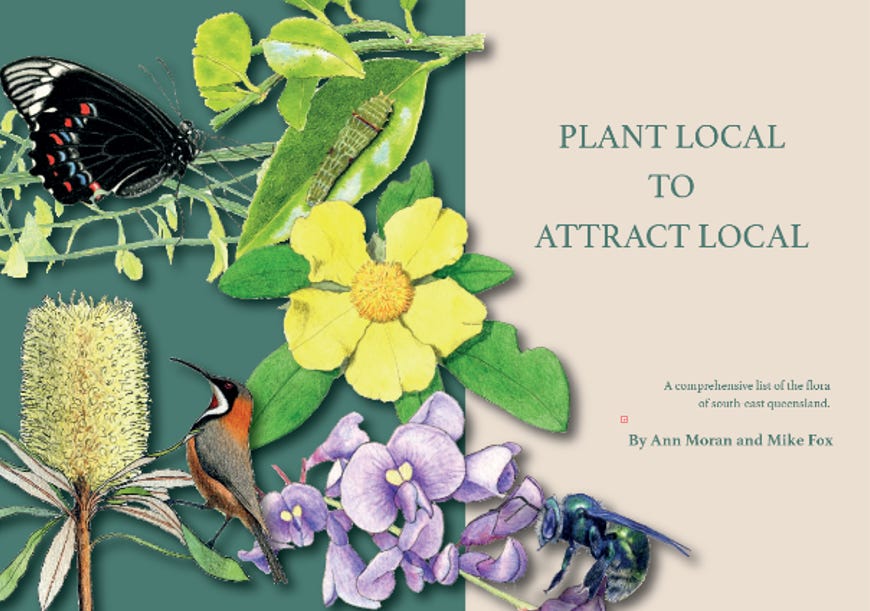
For more information, or to purchase a copy, please contact Mike Fox at pollinatorlink@gmail.com
Upcoming events:
Wetlands in Focus - Boondall Wetlands Photography Competition - closes 9th January
Calling all local photographers! Get ready to take an image celebrating the ecological value of the Ramsar listed Boondall Wetlands. Open to anyone who lives, works or studies in Brisbane.
Participants (12+ and older) can submit 1 entry
Image must be captured in Boondall Wetlands
Entries will be submitted via online form, on the Boondall Wetlands Environment Centre landing page
Winners (6) will have their image showcased in the Boondall Wetlands Environment Centre Community Art Wall.
For more information and to submit a photo: Click this link.
Entries close: Friday 9th January 2026

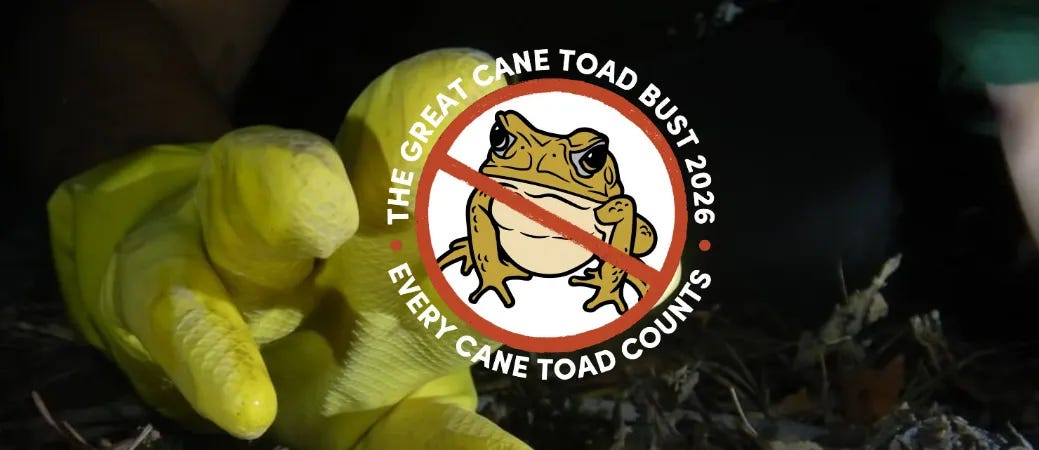
Great Cane Toad Bust - Friday 23rd January
Corbie Street, Davidson Street & Tennis Avenue Bushcare Groups are joining forces for the 2026 Great Cane Toad Bust!
Date & time: Friday 23rd January - 6:30pm - 8pm
Location: Davidson Street Bushcare Site, Davidson Street Park, 82 Davidson Street, Newmarket
Bookings: For more information, and to register your interest, follow the Facebook event page.
World Wetlands Day - Discover the Wonders of Shorebirds - Sunday 1st February
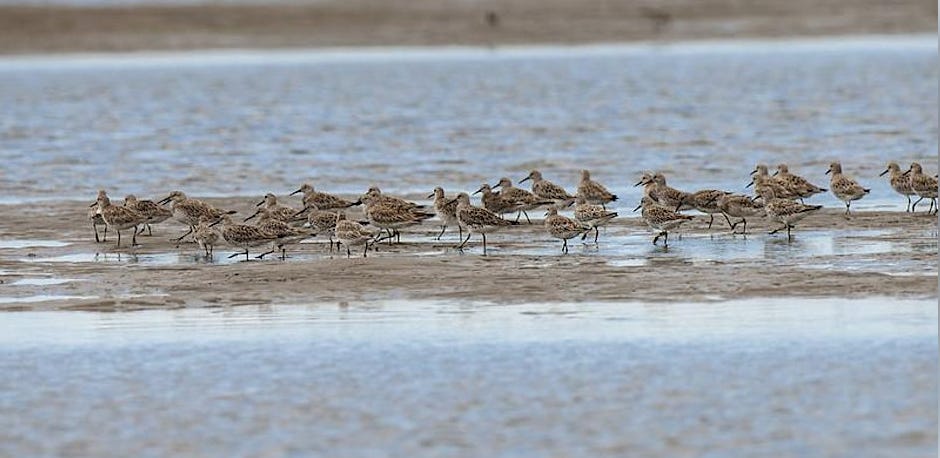
Every spring and summer, Brisbane attracts thousands of tourists to Moreton Bay for its beautiful beaches and natural areas. But did you know that some of our most regular international visitors are actually migratory shorebirds? Each year these remarkable birds travel from as far as the Arctic to rest and feed in Moreton Bay.
This World Wetlands Day, join Frank Burch, local bird enthusiast and photographer and long – time member of Birds Queensland (Queensland Ornithological Society), for a captivating talk at Boondall Wetlands Environment Centre. Frank will share insights as to how they prepare for their epic journeys, the challenges they face and why they make such a strenuous and dangerous trek every year to our shores.
This session will take place indoors.
Date & time: Sunday 1st February, 10am - 11am
Location: Boondall Wetlands Environment Centre, 31 Paperbark Drive, Boondall
Bookings: Required via Eventbrite
Fauna Forensics - Saturday 21st February
Learn how to identify the wildlife that visit your site, by reading the signs they leave behind.
Ever wondered what furry or feathered fauna are visiting your bushcare site when you aren’t there, or wandering your local catchment at night? Then join us for a fun and informative afternoon with Martin Fingland from Geckoes Wildlife, and learn some tips and tricks that will help you become your own ‘wildlife detective’.
Light morning tea provided.
Date & time: Saturday 21st February, 8:30am - 11:30am
Location: Downfall Creek Bushland Centre, 815 Rode Road, McDowall
Bookings: Required via Eventbrite

Botany for Beginners - Sunday 8th March
Join us for an introduction to the wonderful world of Botany and the science of all things plants!
This workshop will introduce participants to the basics of botany and identifying common flora that we interact with everyday, through noticing patterns and appreciating form.
It is aimed at Habitat Brisbane and Catchment Group volunteers with no prior botanical knowledge.
Light morning tea provided.
Date & time: Sunday 8th March, 9am 12noon
Location: Chermside Library, 375 Hamilton Rd, Chermside.
Bookings: Required via Eventbrite
Weed Identification for Bushcare - Sunday 22nd March
New to bushcare or still learning the ropes when it comes to weeds? This introductory workshop is perfect for new volunteers or anyone with limited botanical knowledge. Learn what makes a plant a weed, how to identify them, and why it matters.
Habitat Brisbane experts will guide you through practical tools, resources, and tips to help you recognise some of the most common invasive species found on our bushcare sites.
Whether you’re just starting out or want to build confidence in the field, this indoor classroom session will give you the foundation to make a real impact volunteering.
Light morning tea provided.
Date & time: Sunday 22nd March, 9am 12noon
Location: Chermside Library, 375 Hamilton Rd, Chermside.
Bookings: Required via Eventbrite
Botany for Beginners - Sunday 16th August
Join us for an introduction to the wonderful world of Botany and the science of all things plants!
This workshop will introduce participants to the basics of botany and identifying common flora that we interact with every day, through noticing patterns and appreciating form.
It is aimed at Habitat Brisbane and Catchment Group volunteers with no prior botanical knowledge.
Light morning tea provided.
Date & time: Sunday 16th August, 9am 12noon
Location: Karawatha Forest Discovery Centre, 149 Acacia Rd, Karawatha.
Bookings: Required via Eventbrite
Weed Identification for Bushcare - Sunday 30th August
New to bushcare or still learning the ropes when it comes to weeds? This introductory workshop is perfect for new volunteers or anyone with limited botanical knowledge. Learn what makes a plant a weed, how to identify them, and why it matters.
Habitat Brisbane experts will guide you through practical tools, resources, and tips to help you recognise some of the most common invasive species found on our bushcare sites.
Whether you’re just starting out or want to build confidence in the field, this indoor classroom session will give you the foundation to make a real impact volunteering.
Light morning tea provided.
Date & time: Sunday 30th August, 9am 12noon
Location: Karawatha Forest Discovery Centre, 149 Acacia Rd, Karawatha.
Bookings: Required via Eventbrite
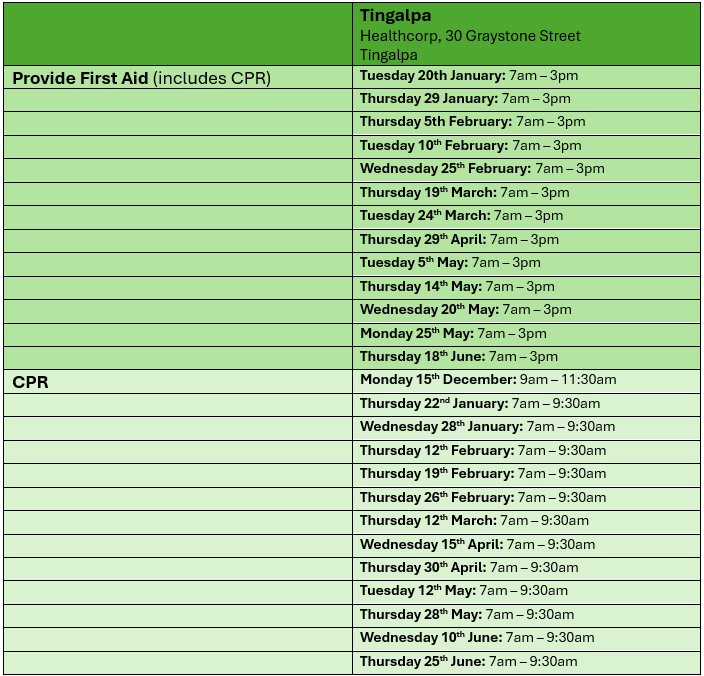
CPR & First Aid Training
Every bushcare group should have at least one regular volunteer who is first aid qualified. First aid qualifications should be renewed every three years, with CPR training refreshed annually. Habitat Brisbane provides opportunities for group leaders or volunteers to get and retain these qualifications, free of charge.
If you’d like to obtain or refresh your first aid qualifications, please view the course options below and contact habitat.brisbane@brisbane.qld.gov.au with the following information:
Course date:
Course name:
Contact number:
Email:
Bushcare Group:


iNaturalist update
As of 17th of December 2025, there have been 30,965 observations of 3,169 different species recorded on Habitat Brisbane bushcare sites in Brisbane.
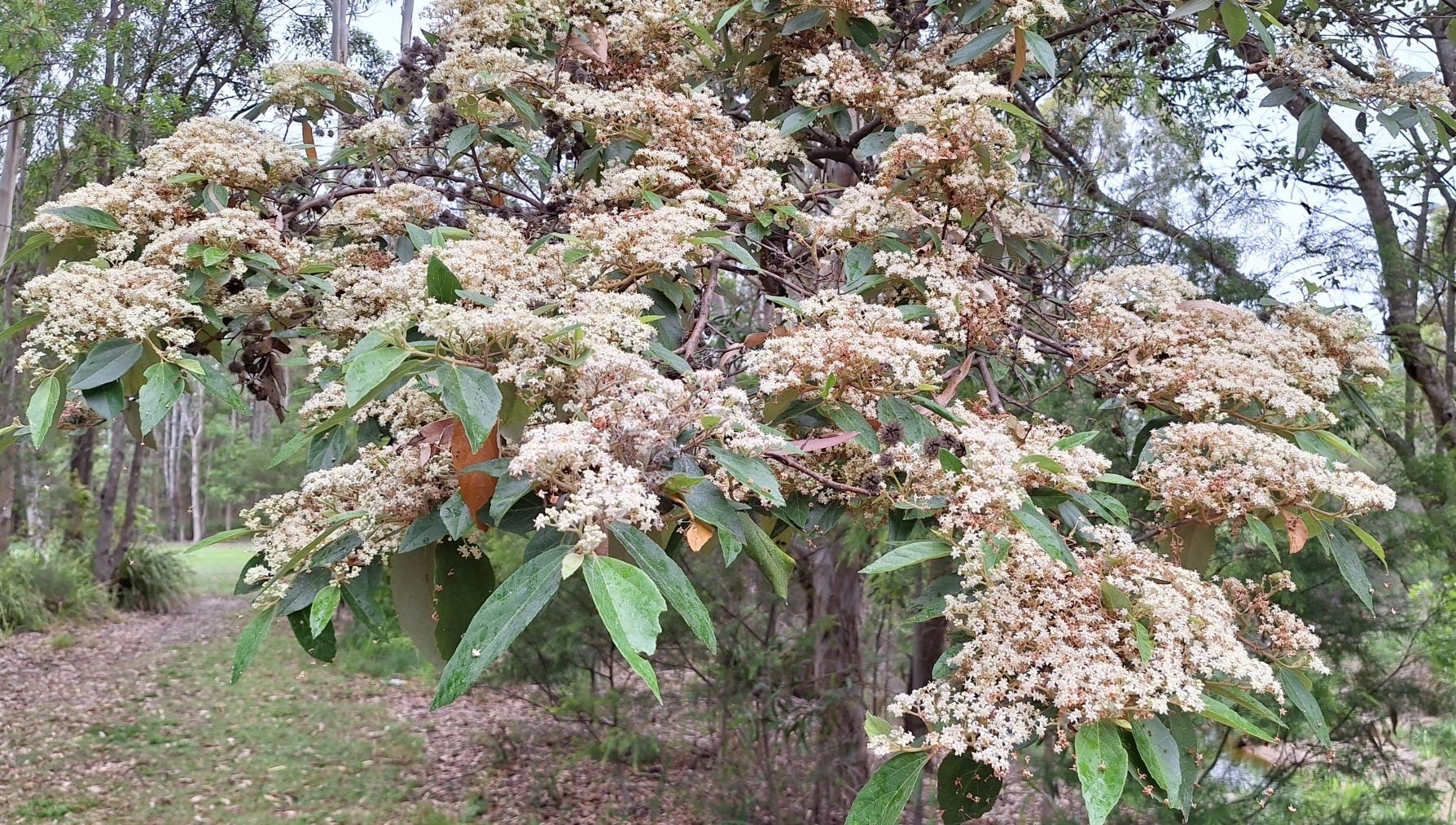
The word “Kurrajong’ is uniquely Australian. It derives from an Aboriginal name for several species of tree in the genus Brachychiton, generally translating as ‘shade tree’. It also lends itself as name to a number of geographic locations across the country. And while this month’s feature species, Brown kurrajong (Commersonia bartramia), isn’t a Brachychiton, and isn’t even uniquely Australian, it IS certainly a shady character!
Brown kurrajong is shrub or tree that can reach up to 25 metres, and usually grows in rainforest and along creeks and moist gullies. It occurs naturally from southern China, throughout south east Asia and along the Australian east coast south to the Bellinger River in NSW. It has an open, spreading habit with distinctive horizontal branches which give it a layered appearance. It’s large heart-shaped to egg-shaped leaves are glossy green above and much paler on the under-surface, sometimes with fine, irregular teeth on the edges.
Profusions of small white flowers blanket the branches from November to January, leading to its sometimes colloquial name of ‘Bush Christmas tree’. It’s hard to miss when in flower, so if there’s one on your bushcare site, you’ll know it! The flowers turn into brown to grey-black globular fruit up to 2.5cms in diameter and covered in soft bristles.
Brown kurrajong is a fast growing and hardy pioneer species , when planted in the right location and appropriate Regional Ecosystem. The fruit is eaten by birds and the flowers attract butterflies.
Every person who posts observations, adds identifications, and spreads the word about iNaturalist makes a difference for biodiversity. Through your collective efforts, you are making biodiversity data and insights available at an unprecedented scale.
To see what else people are finding on Habitat Brisbane sites, simply visit our iNaturalist project.
Weed of the month – Brillantaisia Brillantaisia lamium
Common names: Brillantaisia, Tropical giant salvia.
Description: A large upright herbaceous plant (up to 2 m tall) with four-angled stems. Its oppositely arranged leaves are either egg-shaped in outline or heart-shaped.
Flowers & seeds: Flowering all year around, its violet, blue or dark purple flowers (20-30 mm long) are borne in loose, branched clusters at the tips of the stems. These flowers have two lobes, the upper being hooded and the lower being curved downwards. Its fruit is an elongated capsule (about 30 mm long) that explosively releases its seeds.
Fruit: An elongated, cigar shaped (i.e. fusiform), capsule that turns from green to brownish in colour as it matures. These fruit (about 30 mm long) usually contain about 40 small, flattened seeds. These seeds (about 1-1.5 mm long) are brown in colour and are covered in tiny close-lying (i.e. appressed) hairs.


How it spreads: Reproduces by seed and also occasionally via stem fragments that can take root in damp environments. The seeds are explosively released from the fruit when they are mature, and they may be spread after becoming attached to animals and vehicles. Seeds and stem segments may also be dispersed by water, particularly during floods, and in dumped garden waste.
Impact: Currently regarded as an environmental weed in Queensland and as a potential environmental weed or “sleeper weed“ in other parts of northern Australia. It causes serious impacts to riparian areas and other habitats in coastal areas, where it out-competes the native vegetation and impacts upon wildlife by reducing natural sources of food and shelter.
Control methods: Hand pull isolated plants and small infestations of brillantaisia, making sure that all roots and stem fragments are removed. Plant pieces should either be bagged and taken to the dump or hung up off the ground to prevent reshooting.
Grow me instead: Depending on your RE (Regional Ecosystem), native alternatives can include:
Lobelia gibbosa – Native lobelia
Lobelia trigonocaulis – Forest Lobelia
Pollia macrophylla – Purple Pollia
Lobelia gibbosa – Tall Lobelia; False Orchid
Lobellia quandrangilaris – Lawn Lobelia
Plectranthus parvifloru – Forest Plenctranthus
Mentha grandiflora – Large-flowered Mint
Salvia plebian – Common Sage
For further information on Brillantaisia lamium, please visit the Brisbane City Council Weed Identification Tool.
Cheers,
Ineke, Jenny, Jodi, Kate, Ken, Lisa, Luke, Michael, Nadia, Peter, Rosie, and Simon.
The Habitat Brisbane Team
Infrastructure Services | Public Space Operations | BRISBANE CITY COUNCIL
Email: habitat.brisbane@brisbane.qld.gov.au