Hello Habitat Brisbane Group Leaders,
Welcome to the April 2026 edition of Habitat Brisbane updates, your monthly e-news updates from Brisbane City Council's Habitat Brisbane team.
Group Leaders - please forward this email to the volunteers in your group.
If you received this via your Bushcare Group Leader, you can also subscribe below and we’ll send future editions to you directly! Its free and you can unsubscribe at any time.
“It is not certain that everything is uncertain.” French mathematician, physicist and philosopher, Blaise Pascal wasn’t talking about the weather when he made this observation 400 years ago, but the sentiment certainly applies!
You may have noticed recent media articles about potential for a ‘super El Niño’ event this year. And while its certain that we we should be factoring in the potential for dry times ahead into our planning for bushcare activities, it remains certainly uncertain whether an El Niño event will actually occur, as this article in The Conversation explains.
While any forecasts of weather come with a degree of uncertainty, the current long-range outlook from the Bureau of Meteorology shows below average rainfall and above average day and overnight temperatures for much of the country from May to July. So if you’re planning any large planting events at your site in the next few months e.g. National Tree Day, please consider your ability to water new plants until they establish. And check in with your Habitat Brisbane Officer, who can certainly offer you advice!
We always welcome contributions to the newsletter, so if there’s something your bushcare group would like to share with the wider network, simply email us at habitat.brisbane@brisbane.qld.gov.au
Happy reading! 😊
In this edition
Humans of Habitat Brisbane - Greg Smith
WHS - Personal safety
Bushcare Basics - Tree Poppers
The Great Glossy Count - May 2026
Encountering encampments in HB sites
Upcoming events & training
CPR and First Aid training
iNaturalist update
Weed of the month - Paper mulberry Broussonetia papyrifera
Humans of Habitat Brisbane
Greg Smith - GreenBrook Association Bushcare Group - Group Leader
This month marks a special occasion for Greg Smith, joint leader of the Greenbrook Association Bushcare Group, who will be celebrating his 80th birthday. This milestone also offers an incredible reflection for this ‘Stalwart of the Bush’ who has devoted half his life and countless hours to nurturing his greater back yard.
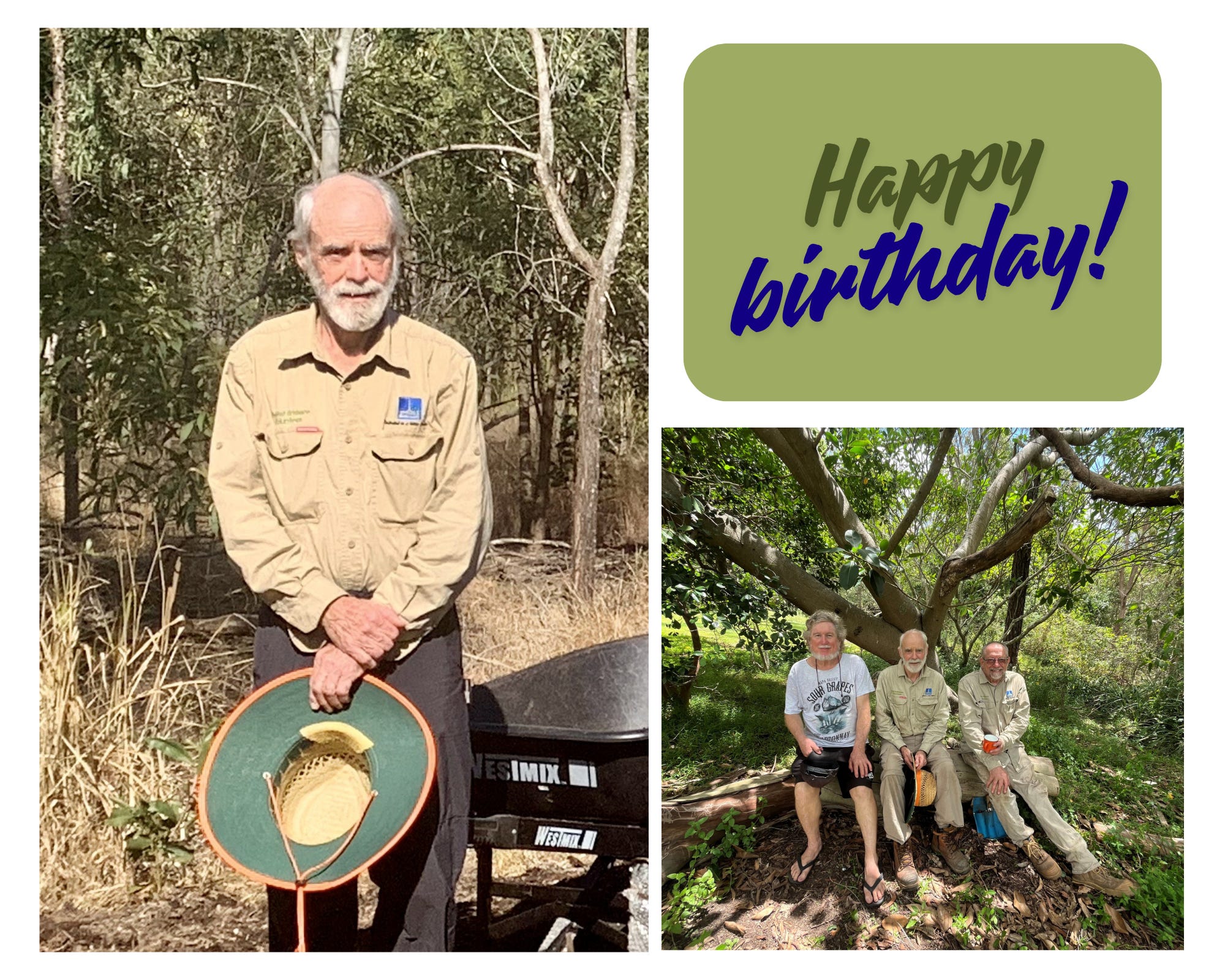
Shared by fellow group leader, David Walters, and wife, Margaret:
It was August 1975 when Greg’s wife, Margaret, called him to come and look at a potential house in Leyton St in the Grange. Greg took one look at the property and said, “Where do I sign?”. Backing on to acres of bush and with no back door neighbours he was in no doubt that this was where he wanted to live.
They moved in with their young family but the wisdom of this decision was put to the test in November of that same year, when a savage bush fire took hold in the bush behind their property. Flames raced up the trees and the foliage on the trees exploded and the noise sounded like a freight train. Their house was covered in soot but their young son Michael was thrilled to see the fire brigade extinguish the flames. Despite the threat of fire they have not regretted one day spent living in their Leyton Street home.
In 1981, Frank Box started The North Brisbane Forests League in neighbouring Hickey Park, a community group with aspirations for urban forestry across North Brisbane. After moving operations in 1983 to a derelict patch of land that later became known as Grange Forest Park, the group changed its name to the GreenBrook Association in May 1989, and shortly after this, Greg joined the group.
Since then, Greg has been a continuous member, attending virtually every working bee for nearly 40 years. In 2010 Frank Box moved away from the area and Greg stepped up and became the leader of the group along with two other long-term volunteers. To this day he dedicates himself to protecting and nurturing this precious piece of urban bushland along the banks of Kedron Brook.
When COVID restrictions limited the group’s activities, Greg and Maragret’s back deck became a favourite meeting place. For those who frequent the park, he cuts a familiar figure where he can be found almost daily in his tireless battle against weeds. Always ready for a chat, his work has inspired many to join to the group and the success of 40 years of bush regeneration in Grange Forest Park has meant that the threat of bush fire in the area is now greatly diminished.
His example has helped the GreenBrook Association become one of the most successful Habitat Brisbane Groups. His friends and colleagues salute him.
And from all of the team at Habitat Brisbane and CCPP, we would like to thank Greg for the heart and hard work he continues to pour into his local bushcare and wish him a wonderful 80th birthday!
More information about the GreenBrook Association can be found at greenbrookassociation.com.
If you have a story you would like to share, please contact Habitat.Brisbane@brisbane.qld.gov.au
Encountering encampments in HB sites
Our parks and natural areas are meaningful places within our community, providing green spaces for leisure and critical habitat to support our biodiversity.
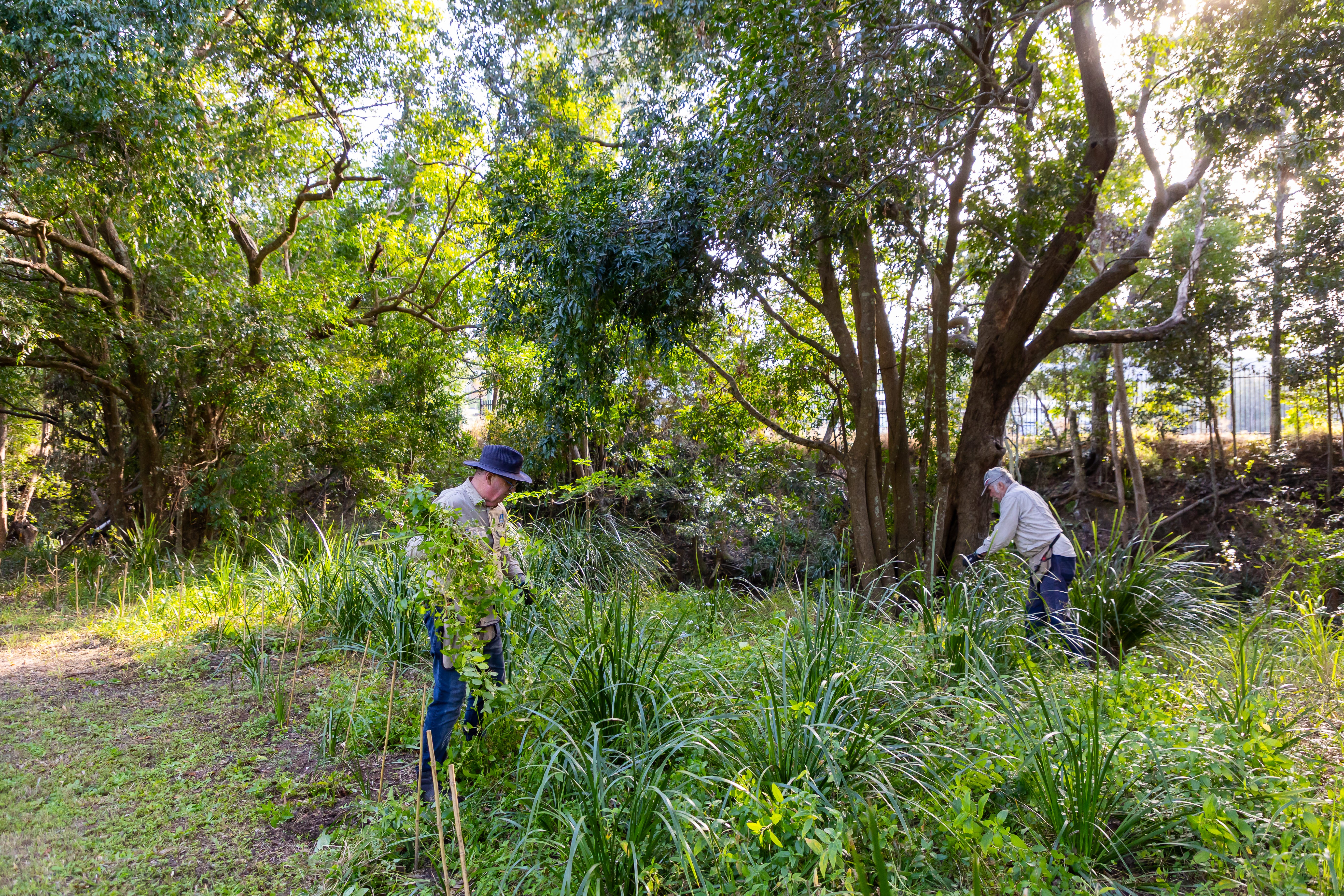
You may have started to encounter more vulnerable people within these spaces, and it is important we are mindful of our personal safety and also the circumstances at large.
Council is aware of growing concerns about anti-social behaviour, drug use and community safety risks linked to tent encampments in our parks. We’re working with the Queensland Government to deliver a coordinated and supported response for vulnerable members of our community.
Council always takes a compassionate approach to homelessness and there is no blanket move-on order. Our priority is to connect those in need with services and help them access support from Queensland Government agencies.
Homelessness is a serious and complex issue, impacted by many social, economic and health-related factors.
According to the most recent stats by Homelessness Australia, approximately 3 million people are at risk of homelessness, where one setback like job loss or illness could mean losing their home — up 63% since 2016.
This increasing demand for support has meant that homelessness services are stretched beyond their limits.
Managing your safety
Ensuring a safe volunteering experience is Habitat Brisbane’s top priority. Here’s a few things you can do to help make that happen.
If you come across encampments in or near your bushcare site, notify your Habitat Brisbane Officer. They’ll check in with Council’s Safe Communities team to ensure they are aware of the situation and can work with those in need.
Stay away from camps and don’t interfere with associated items or possessions.
If you are approached be clear about what your role is e.g. you are a volunteer doing bushcare.
Trust your instincts. Remove yourself from situations that make you feel unsafe or uncomfortable. If you feel you are in immediate danger, contact Triple Zero (000).
If you come across biohazards e.g. syringes, excrement etc, in other areas away from camps, don’t handle them it. Contact your Habitat Brisbane Officer for advice on dealing with these.
Always work with another volunteer where possible, and tell someone where you’re going and when you’ll be back.
Report any anti-social behaviour, illegal activities or damage to vegetation and Council assets to the Council Contact Centre on 3404 8888.
You can find more information on Personal Safety on Council’s website.
Check in with your Habitat Brisbane Officer if you have any concerns or questions.
You can support efforts to keep Brisbane’s parks safe by:
contacting the 24/7 Queensland Government’s Homeless Hotline on 1800 474 553 if you see someone in need
donating essential items like toiletries, non-perishable food and clothing to Council’s Homeless Connect events.
Bushcare Basics - Tree Poppers - foe to woody weeds
As you would all know first-hand, a lot of what goes into bushcare restoration is good weed management. A task that is ongoing, repetitive and arduous. But if – like me – you get a deep satisfaction in your soul when you manage to pull out a weed, roots and all… well, then this might be the tool for you.
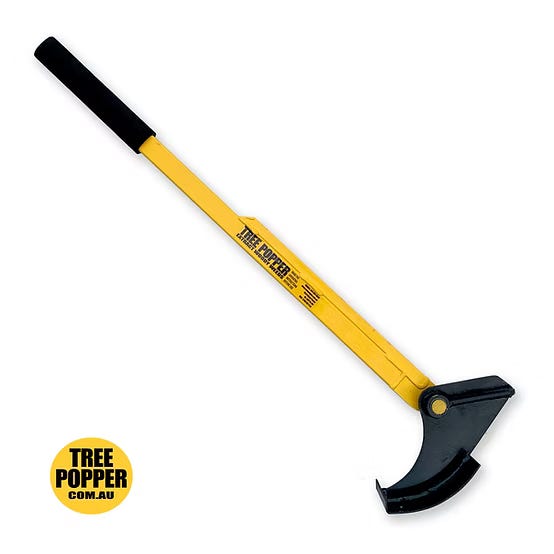
Tree Poppers are specialised tools made of steel designed for removing woody weeds and saplings by utilising leverage to remove plants out of the ground. Consisting of a lever and foot-piece held together by a circlip, the plier-like jaws are placed around the plant stem at the base. When downward force is applied to the handle, the plant is levered or ‘popped’ out of the ground, requiring far less physical strength than normal hand removal.
Available in three sizes, Tree Poppers are another chemical-free weed management option, and are particularly handy for sensitive habitats, e.g. sites by waterways.
Click the link below for an instructional video on how it works.
While this clever tool is useful in bushcare, it may not be suitable for every site or every weed species. Using a Tree Popper in sites with rocky, hard and or very dry soils may result in weeds snapping at the roots and allowing regrowth. Ochna is particularly prone to snapping roots even in good conditions, so effective use can take some practice.
Habitat Brisbane has a number of Tree Poppers available to loan to bushcare groups, and you’ll need to have an induction on safe manual handling techniques and the correct PPE before use.
If you think a Tree Popper might be useful for your site, have a chat to your Habitat Brisbane Officer.
The Great Glossy Count 2026
Glossy Black-Cockatoos need you! The Great Glossy Count 2026 is calling on citizen scientists to collect data about this iconic threatened species on Saturday 16th and Sunday 17th May 2026.
Glossy Black-Cockatoos are listed as Vulnerable under Australian conservation law and continue to face serious threats from habitat loss. Glossies depend almost entirely on the seeds of native Casuarina and Allocasuarina trees for food, so understanding where they live and feed is essential for conservation action.
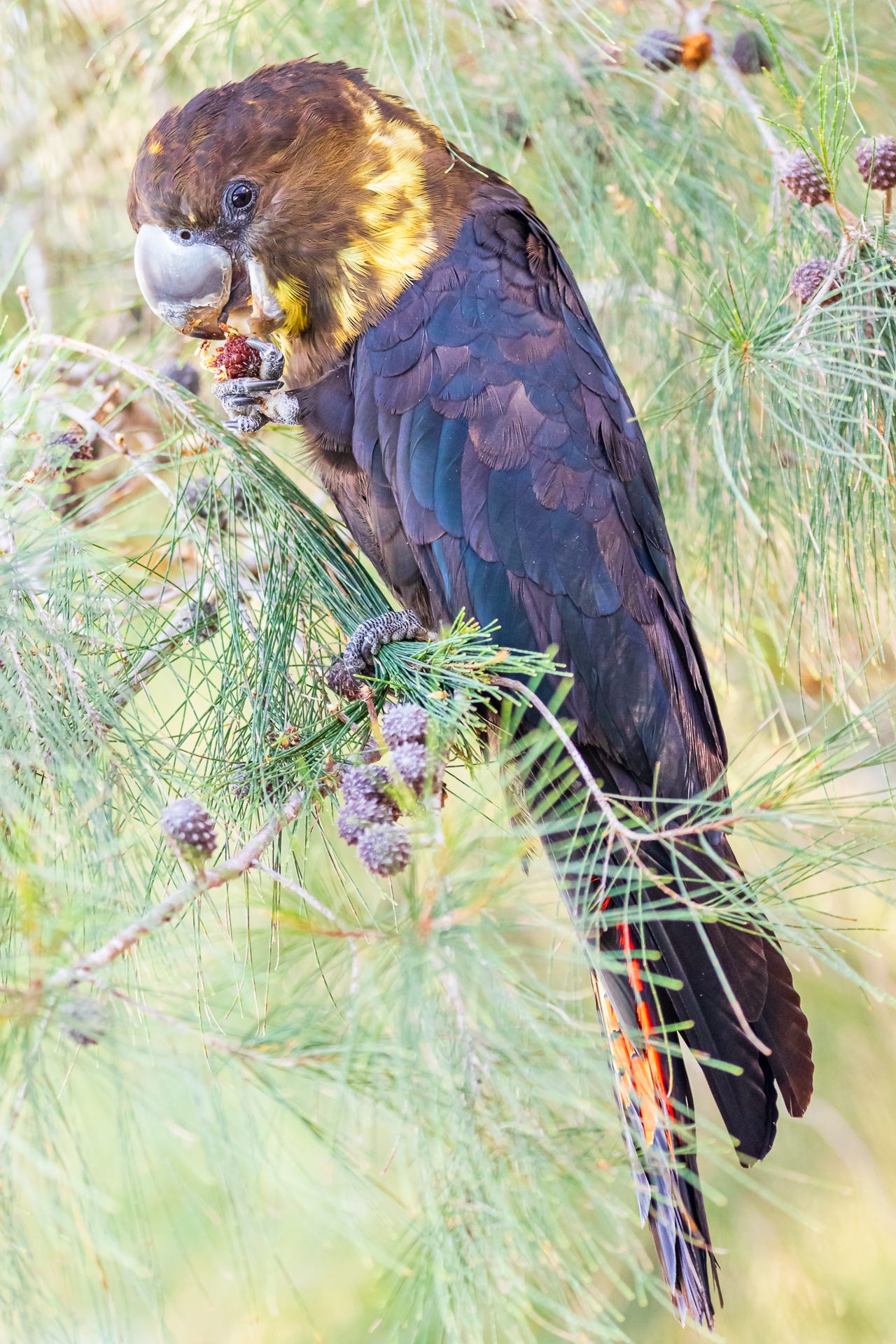
Volunteer citizen scientists receive training and resources to support participation and the event takes place across parts of Queensland, NSW, Victoria and ACT.
For more information and to register your participation, visit https://bit.ly/greatglossycount.
In the lead-up, you can also join like-minded bird-lovers and learn how to locate and identify Glossy Black-Cockatoos and their feed trees in the wild via these FREE virtual workshops:
Upcoming events:
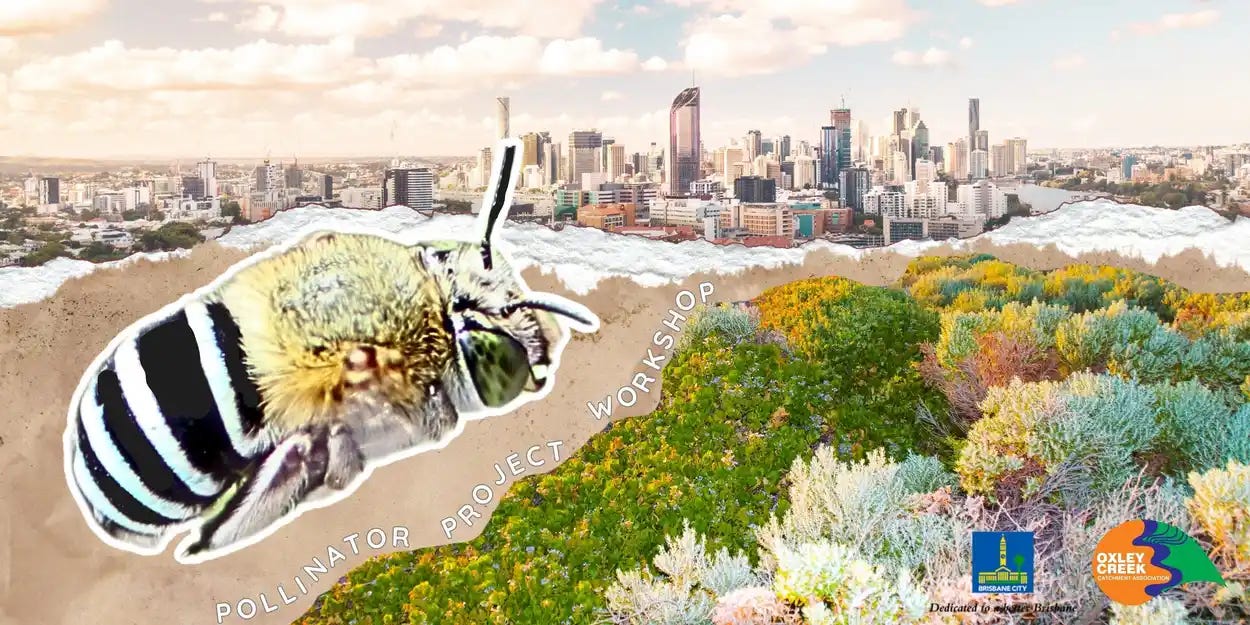
Pollinator Project - April Workshop - Saturday 18th April
Oxley Creek Catchment Association (OCCA) and BCC are hosting a community planting event and workshop sharing practical ways to be a better wingmate to pollinators in our urban spaces.
You’ll get your hands dirty planting a vibrant mix of pollinator-favourite food, followed by a workshop with the team behind the Pollinator Project and CCPP’s Wildlife Conservation Partnerships Officer, Fflur Collier, sharing how you can boost habitat in urban spaces and show how anyone can become a citizen scientist for pollinator conservation.
Date & time: Saturday 18th April - 9am - 12pm
Location: Blackheath Road Park, Corinda.
Bookings: Spots are limited – please register your interest via Humanitix.
Bushcare Open Day - Huntington Tuckett Bushcare Group - Sunday 3rd May
We’re all familiar with our own bushcare sites, but have you ever wondered what happens on someone else’s patch? Now is your chance to find out!
Come along as we stickybeak at the work done by the Huntington Tuckett Bushcare Group in this important patch of bushland in Kenmore Hills.
Date & time: Sunday 3rd May - 8:45am - 11am
Location: Branton Street Bridge, end of Branton Street, Kenmore Hills.
Bookings: Required via Eventbrite.
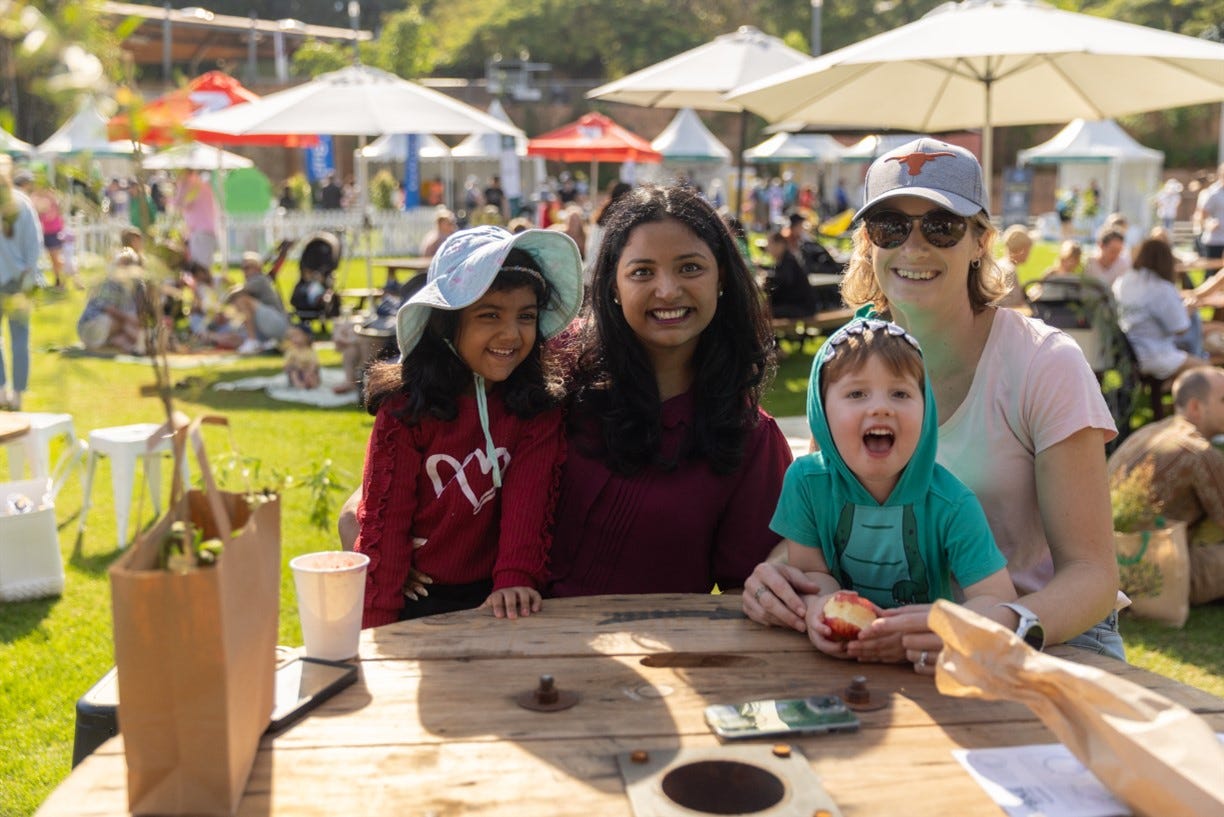
Sustainable BNE Festival - Sunday 24th May
The Sustainable BNE Festival is Brisbane’s flagship celebration of sustainable living. This free, family and dog friendly event brings together practical workshops, inspiring talks, live music, markets, great food, kids’ activities and free native plants.
Delivered by Brisbane City Council in partnership with Brisbane Sustainability Agency, the festival showcases local ideas and solutions to help residents make more sustainable choices at home and in their community.
Date & time: Sunday 24th May - 9am - 3pm.
Location: Roma Street Parkland, Brisbane City.
Bookings: No bookings required.
Integrated Weed Management - Sunday 21st June
How to assess and prioritise weed management on your bushcare site
Integrated weed management is the coordinated use of a variety of control methods, reducing reliance on herbicides alone, and increasing the chances of successful weed control.
Join other Habitat Brisbane & Catchment Group volunteers as we explore what makes a weed, weed ecology, why manage weeds (and when to leave them be), how to choose and use multiple approaches to weed management, and how to assess and prioritise your site’s weed management needs.
The session will include a guided run through of using a site assessment methodology, on an active bushcare site, as well as the chance to try it for yourself.
Light morning tea will be provided.
Date & time: Sunday 21st of June, 8am – 12 noon.
Location: B4C Office & Sustainability Centre - 1358 Old Cleveland Rd (via, Wright St,) Carindale QLD 4152.
Bookings: Required via Eventbrite.
Botany for Beginners - Sunday 16th August
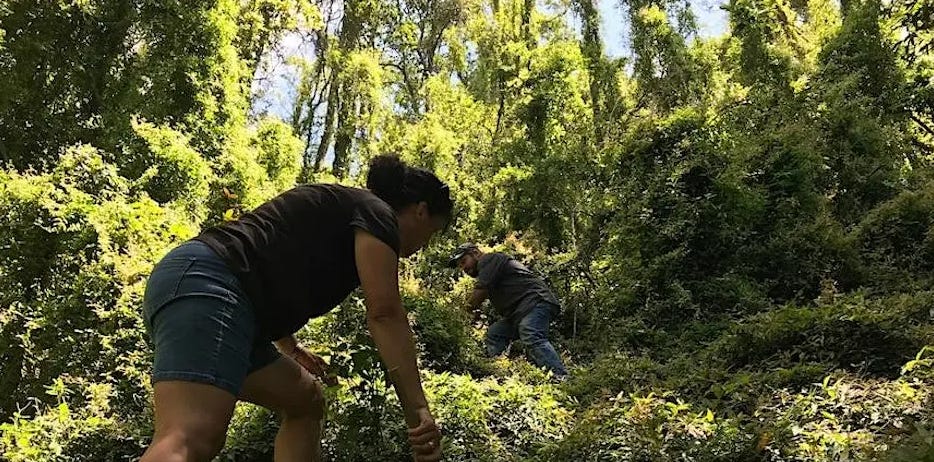
Join us for an introduction to the wonderful world of Botany and the science of all things plants!
This workshop will introduce participants to the basics of botany and identifying common flora that we interact with every day, through noticing patterns and appreciating form.
It is aimed at Habitat Brisbane and Catchment Group volunteers with no prior botanical knowledge.
Light morning tea provided.
Date & time: Sunday 16th August, 9am -12noon
Location: Karawatha Forest Discovery Centre, 149 Acacia Rd, Karawatha.
Bookings: Required via Eventbrite.
Weed Identification for Bushcare - Sunday 30th August
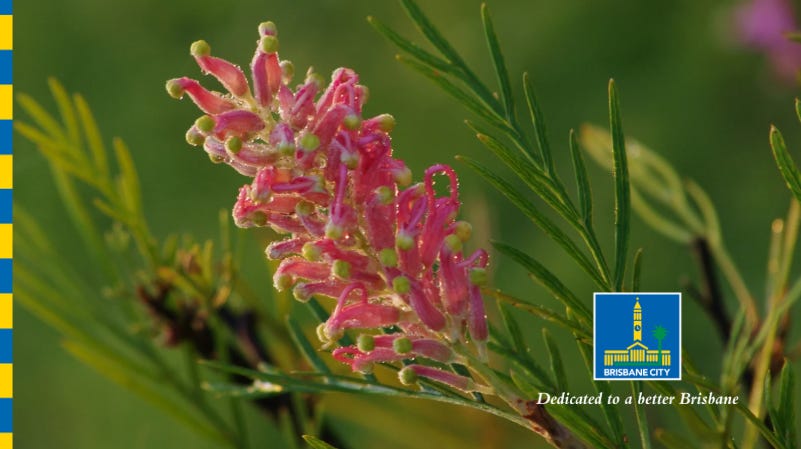
New to bushcare or still learning the ropes when it comes to weeds? This introductory workshop is perfect for new volunteers or anyone with limited botanical knowledge. Learn what makes a plant a weed, how to identify them, and why it matters.
Habitat Brisbane experts will guide you through practical tools, resources, and tips to help you recognise some of the most common invasive species found on our bushcare sites.
Whether you’re just starting out or want to build confidence in the field, this indoor classroom session will give you the foundation to make a real impact volunteering.
Light morning tea provided.
Date & time: Sunday 30th August, 9am -12noon
Location: Karawatha Forest Discovery Centre, 149 Acacia Rd, Karawatha.
Bookings: Required via Eventbrite.
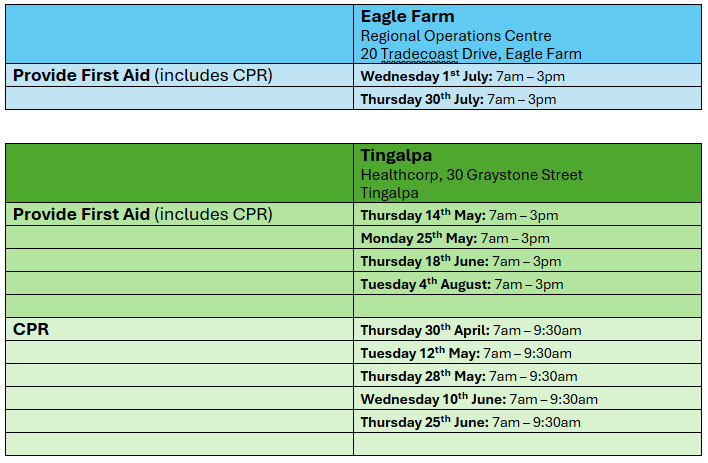
CPR & First Aid Training
Every bushcare group should have at least one regular volunteer who is first aid qualified. First aid qualifications should be renewed every three years, with CPR training refreshed annually. Habitat Brisbane provides opportunities for group leaders or volunteers to get and retain these qualifications, free of charge.
If you’d like to obtain or refresh your first aid qualifications, please view the course options below and contact habitat.brisbane@brisbane.qld.gov.au with the following information:
Course date:
Course name:
Contact number:
Email:
Bushcare Group:
iNaturalist update
As of 16 of April 2026, there have been 35,156 observations of 3,390 different species recorded on Habitat Brisbane bushcare sites in Brisbane.
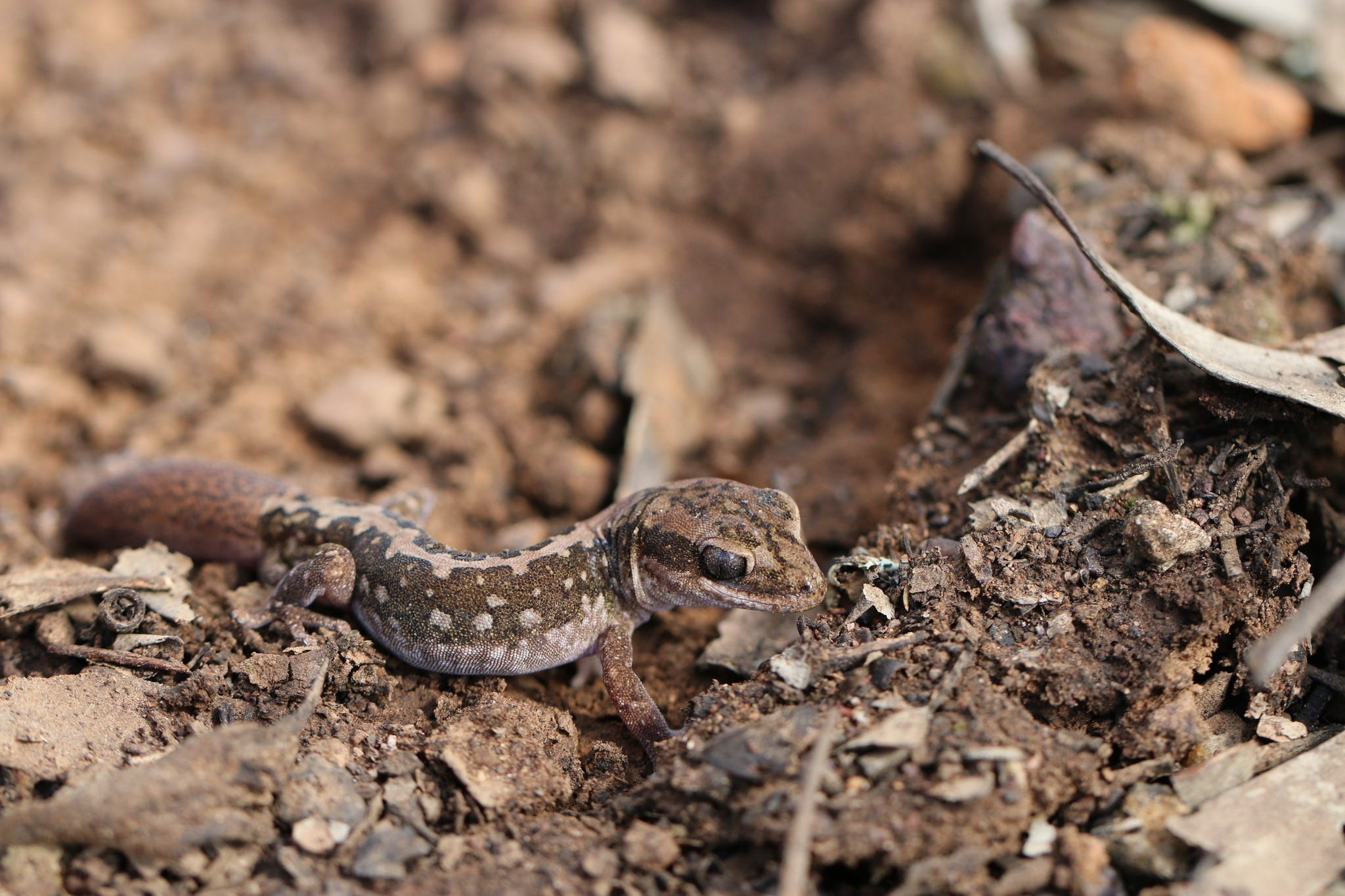
This month’s feature species, the Eastern Stone Gecko (Diplodactylus vittatus), was recently recorded near an inner-west bushcare site. The scientific name of this genus, Diplodactylus, refers to the paired and rounded pads at the tips of their toes (diplo meaning two or double, dactylus meaning finger or toe). The species name, vittatus, is commonly used in nomenclature when referring to stripe/s or bands, and in this case, highlighting the deeply notched to broken vertebral stripe down its back from the neck to the tip of its short, stumpy tail.
The Easter Stone Gecko is a small nocturnal terrestrial lizard found in open shrubland, dry bushland, forest and semi-arid areas throughout Queensland, NSW, Victoria and South Australia. It is dark brown to grey in colouring and grows up to 9cm from snout to tail end. It relies heavily on rocks, debris and foliage for survival, camouflaging into its environment and sheltering in burrows and shallow depressions under stones and fallen timber.
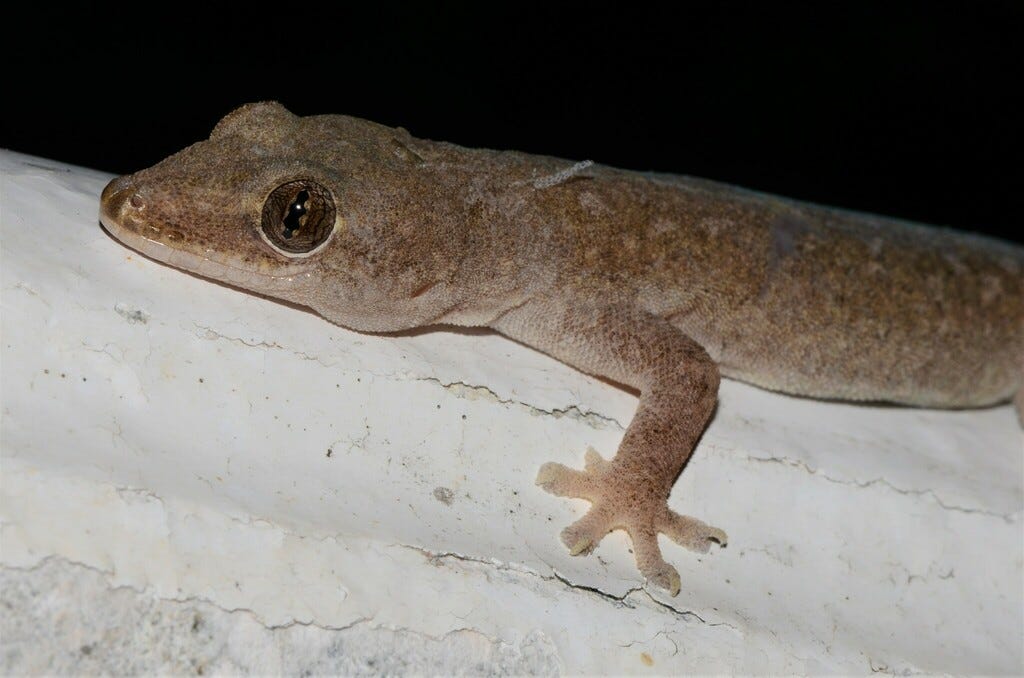
Native geckoes have been largely pushed out by the introduced and widely distributed Asian House Gecko Hemidactylus frenatus. Originally a tree-living species, it favours tropical and subtropical areas and has been described as a formidable coloniser across the globe. Initially confined to urban spaces, its distribution has been expanding into more natural habitats and can be found from Cooktown in FNQ to the Kimberley region in WA, and it seems to be continuing its journey south with reports in NSW.
Want to learn more about native geckos? Here are a couple of great resources to start with:
· Wildlife of Greater Brisbane, Queensland Museum
· A Complete Guide to Reptiles of Australia, Steve Wilson and Gerry Swan
· A Field Guide to Reptiles of Queensland, Steve Wilson
Every person who posts observations, adds identifications, and spreads the word about iNaturalist makes a difference for biodiversity. Through your collective efforts, you are making biodiversity data and insights available at an unprecedented scale.
To see what else people are finding on Habitat Brisbane sites, simply visit our iNaturalist project.
Weed of the month – Paper mulberry (Broussonetia papyrifera)
Common names: Paper mulberry, Cloth plant
Description: A fast-growing tree growing – typically up to 15m tall but occasionally 20m - with milky sap. Deciduous and typically loses leaves during winter. Moderately rough grey-brown bark. The large leaves (6-20cm long and 5-15cm wide) are rough on the upper surface and hairy underside, with sharply toothed margins and pointed tips. Leaves can vary in shape: young leaves are often 3-5 lobed, becoming heart-shaped to egg-shaped as they mature, and are alternately arranged along the stems.
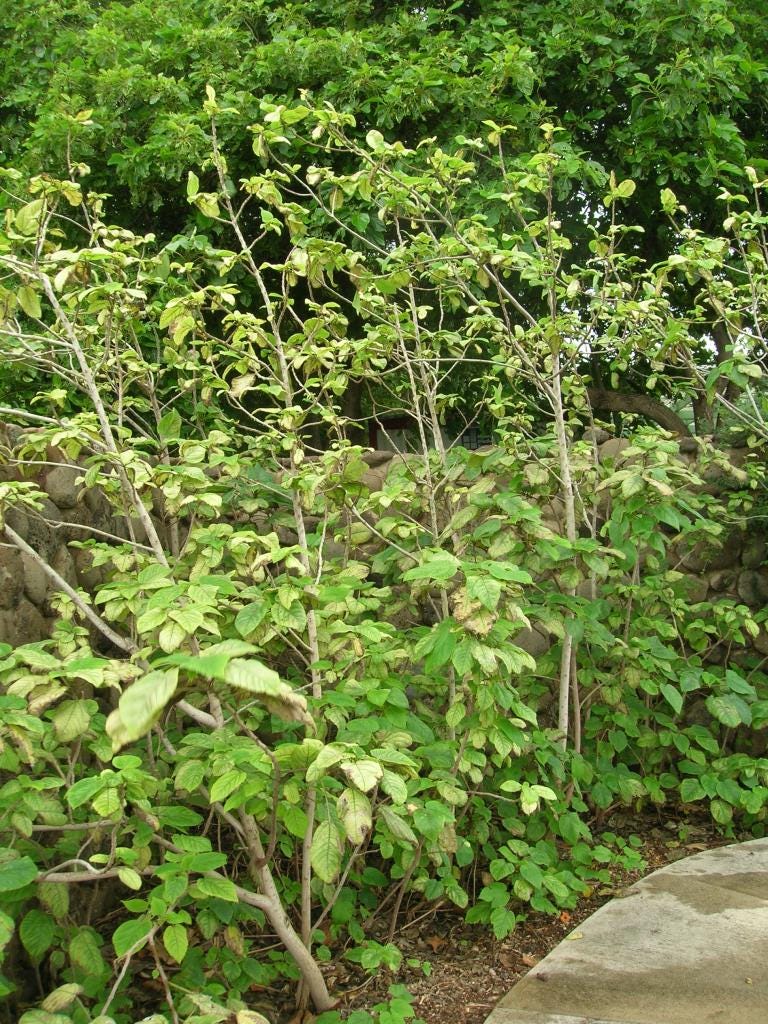
Flowers: Flowers in spring. Male and female clusters are borne on separate trees. Male flowers are clustered in a cylindrical spike (3-8cm long), greenish-yellow and droopy in nature. Female flower clusters are green and round in shape (1.5-2.5cm across).
Fruit & seeds: Round, fleshy fruit (1.5-3cm across) turning from green to yellow, orange, red or reddish-purple. Mostly present during summer. Minute reddish-brown seeds.
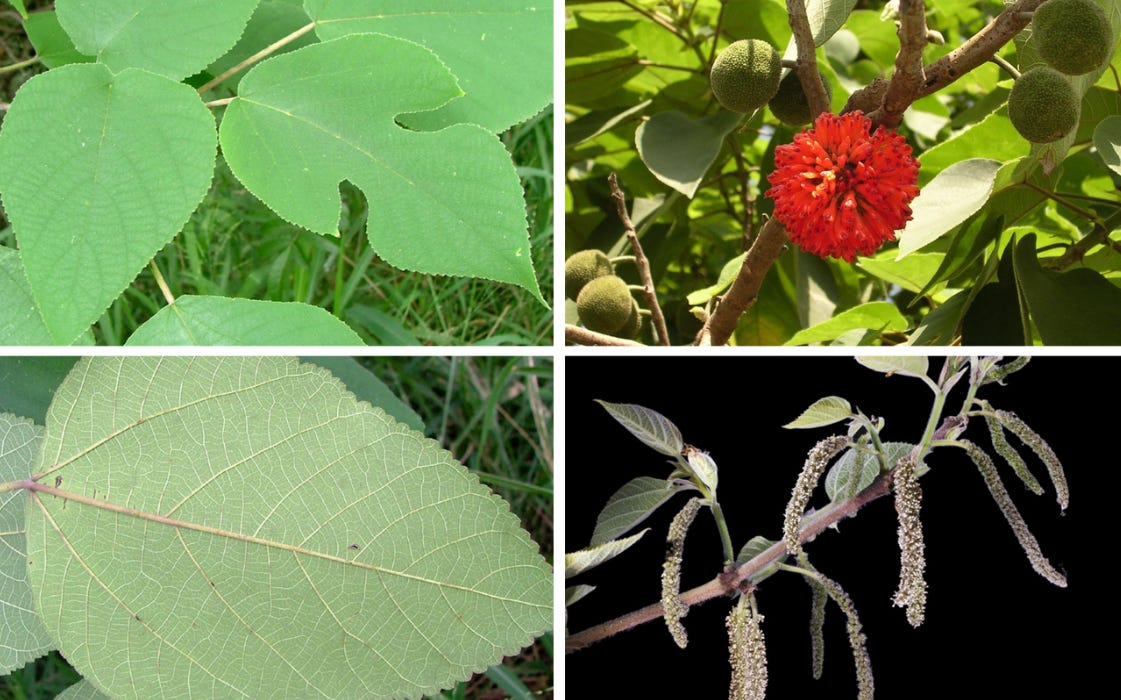

How it spreads: Reproduces via seed and root suckers. Seeds are widely dispersed by birds and other animals that eat the fleshy fruit. Individual plants can rapidly develop into large colonies through root suckers. Suckers often form when stems are damaged/broken.
Impact: Native to south-east Asia, Paper mulberry is a fast-growing tree reaching heights of 4m in its first six months, quickly disrupting native habitat on forest edges and in canopy gaps. It is also responsible for one of the highest pollen counts in the world potentially causing serious allergies. Prefers warm-temperate, subtropical and tropical climates with moist, fertile, well-drained soils.
Control methods: Hand-weed saplings and using a tree popper for larger plants (if site suitable). Keep in mind that new plants can grow from broken plant parts, so be sure to remove all plant material.
Grow me instead: Pending your RE (Regional Ecosystem), native alternatives can include Pipturus argenteus Native Mulberry/White Nettle.
For further information on Paper mulberry Broussonetia papyrifera, please visit the Brisbane City Council Weed Identification Tool.
Cheers,
Ari, Ineke, Geoff, Jenny, Jodi, Kate, Ken, Lisa, Luke, Michael, Nadia, Peter, and Simon.
The Habitat Brisbane Team
Infrastructure Services | Public Space Operations | BRISBANE CITY COUNCIL
Email: habitat.brisbane@brisbane.qld.gov.au